
Across the country, communities are facing escalating challenges: more extreme weather events, prolonged droughts, rapid population growth, and increasingly expensive demands on aging infrastructure.
While traditional gray infrastructure, such as pipes, culverts, levees, cement ditches, and engineered stormwater facilities remains essential, it is no longer sufficient on its own. To build true long-term resilience, we should consider pairing the strengths of gray systems with the unmatched natural performance of aquatic green infrastructure.
Wetlands, streams, rivers, lakes, ponds, and floodplains are more than environmental amenities. They are high-functioning components of a community’s infrastructure network—systems that provide services every hour of every day. When conserved or restored alongside engineered systems, they create a more balanced, cost-effective, and resilient landscape.
Aquatic Systems as Natural Infrastructure Workhorses
Gray infrastructure will always play a key role in managing water, especially in dense urban environments where space is limited and capacity demands are high. But gray systems are typically designed to move water away quickly, not manage it holistically.
Aquatic green infrastructure offers complementary functions that gray systems cannot replicate.
- Wetlands filter pollutants, absorb peak flows, and recharge groundwater.
- Streams and rivers transport nutrients, support aquatic habitats, and regulate ecological processes.
- Floodplains disperse flood energy and reduce downstream damage.
- Lakes and ponds store stormwater, improve water quality, and support biodiversity.
These systems form a cohesive hydrologic network that enhances the overall efficiency of how the landscape manages water, or lack thereof. Rather than replacing gray infrastructure, aquatic systems strengthen and support it, reducing pressure on engineered components while improving ecological and stormwater management outcomes.
Resilient Performance During Extreme Weather
Extreme rainfall, flash flooding, and intensified drought are becoming more common, and gray systems alone often struggle to keep up. In many communities, stormwater pipes and canals are undersized for modern precipitation patterns, and expanding them can be enormously expensive.
Aquatic green infrastructure provides flexible, adaptive benefits in these situations.
- Wetlands and floodplains act like natural storage basins, capturing and slowing stormwater to reduce peak flows.
- During drought, wetlands release stored water gradually, helping maintain streamflow and groundwater levels.
Communities that maintain intact aquatic systems consistently experience less flood damage and reduced recovery costs. Natural systems get stronger and more functional over time, making them well-suited to a changing climate.
A Cost-Effective Complement to Engineered Systems
One of the strongest arguments for integrating aquatic green infrastructure is cost. Restoration of wetlands, reconnection of stream channels, and preservation of floodplains often cost significantly less than building new engineered stormwater capacity. The EPA and numerous state agencies have found that wetland-based stormwater treatment can cost 30–80% less than traditional engineered systems while offering broader benefits.
These cost savings compound when communities consider avoided damages: fewer road washouts, reduced erosion, lower flood insurance claims, and decreased need for major stormwater retrofits. By allowing natural systems to do the work they are designed for, communities can stretch infrastructure budgets further and invest more strategically in the gray systems that truly need expansion.
After Hurricane Sandy, New Jersey restored coastal wetlands to reduce storm surge and flooding. The project cost far less than building new seawalls, and the wetlands now absorb wave energy, protect communities, improve water quality, and provide habitat.
In Nashville, the city is restoring and reconnecting sections of the Cumberland River’s floodplain after repeated flood damage through the East Bank Plan. The natural floodplain now stores millions of gallons of stormwater, reducing pressure on stormwater pipes and lowering flood risk. The restoration cost less than major gray-infrastructure upgrades while also improving recreation and wildlife habitat.
Improving Livability and Landscape Efficiency
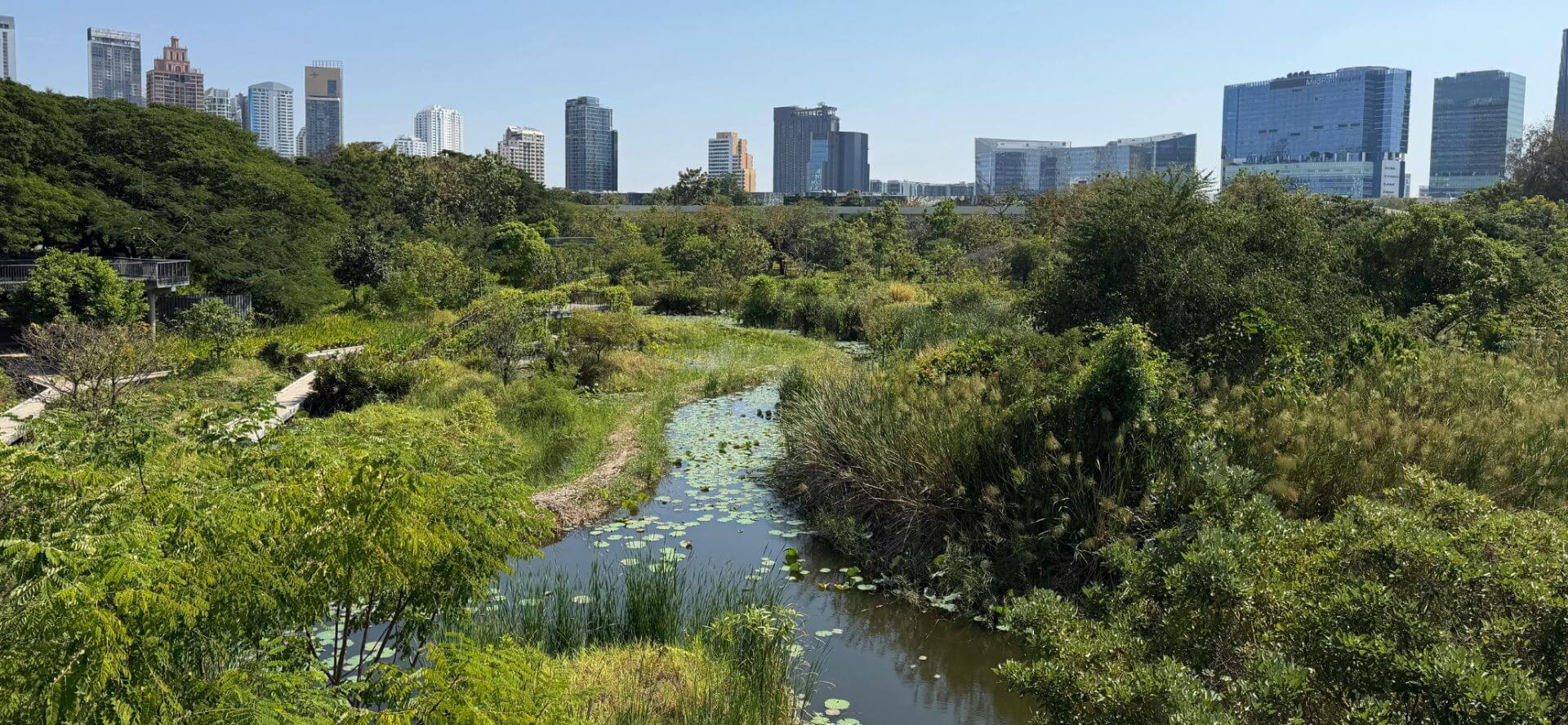
Integrating aquatic systems into community planning does more than improve flood management. These systems enhance recreation, increase wildlife habitat, boost property values, and improve water quality. They create more attractive, livable neighborhoods while functioning as vital infrastructure.
A 2022 study featured by UConn Today examined 1,500+ home sales in Baltimore County, Maryland, before and after local stream restoration projects. Researchers found that homes within 1,000 feet of a restored stream increased in value by roughly 15%, while homes up to 2,000 feet away saw an 11% increase.
These restorations improved water quality, reduced localized flooding, and enhanced neighborhood aesthetics—key drivers of the added property value. Notably, homes far from restored reaches saw no significant change, underscoring that the uplift was directly tied to aquatic green infrastructure improvements.
A Balanced Path Forward
Gray infrastructure is indispensable. But relying on it alone is costly, limited, and unsustainable in the face of climate change and rapid development. By integrating aquatic green infrastructure into our planning and engineering frameworks, we create hybrid systems that are more resilient, more affordable, and more adaptive.
At Unique Places to Save, we recognize that long-term resilience depends on permanently protecting the wetlands, streams, floodplains, and aquatic corridors that make these hybrid systems possible. Our conservation projects ensure these natural systems remain intact, functional, and connected across landscapes, providing communities with lasting flood protection, cleaner water, richer habitat, and enhanced quality of life.
By safeguarding these aquatic systems forever, we help communities lock in the economic, ecological, and climate-resilience benefits of green infrastructure—ensuring today’s smart planning becomes tomorrow’s enduring strength.
About the Author
Michael brings over 20 years of experience to his role as Trusted Conservation Advisor at Unique Places to Save. He has worked to conserve over 250,000 acres of land across the U.S. while securing over $200M in funding and transacting well over $500M in land and other real estate.
Learn More