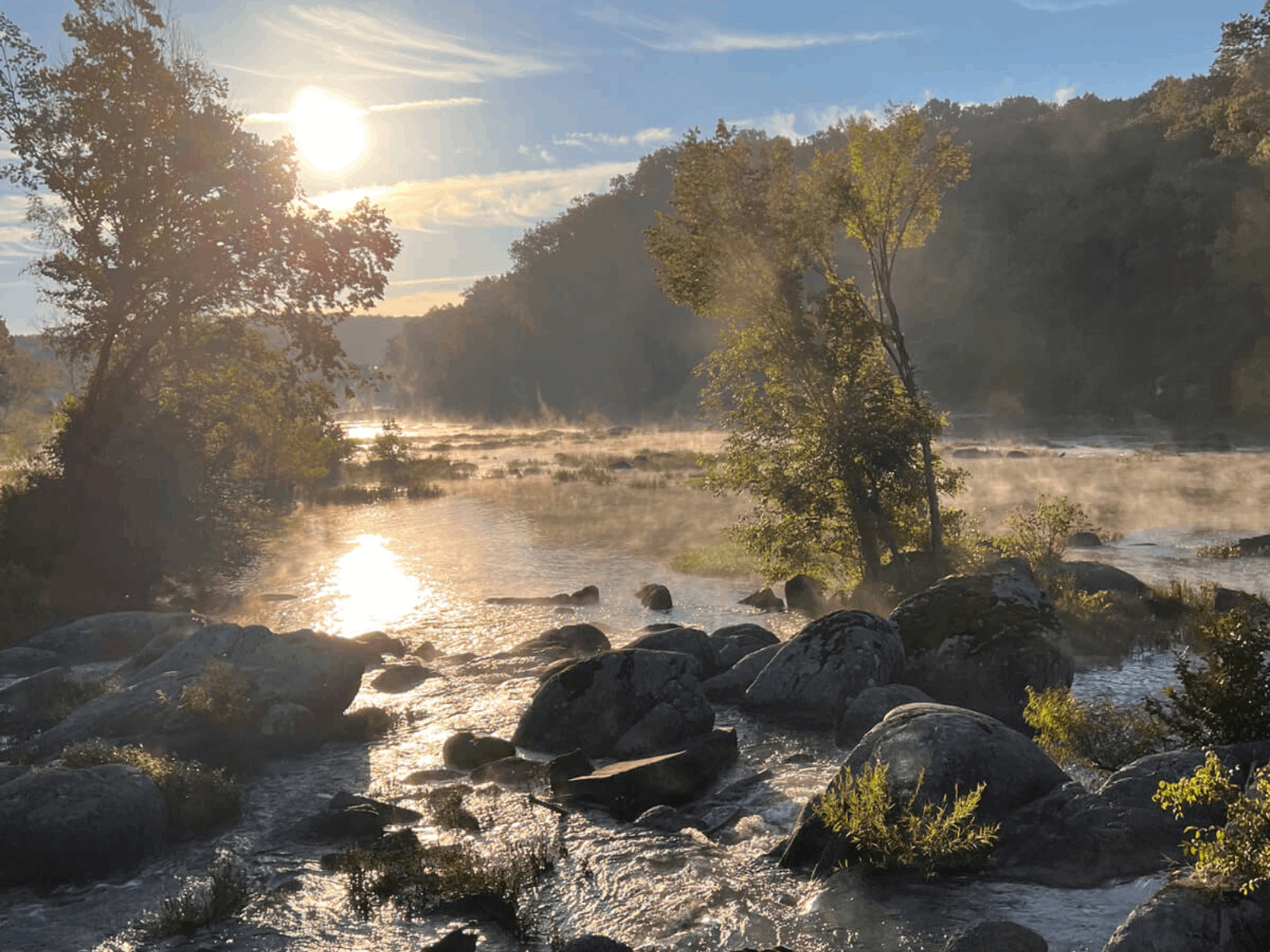

Sunrise over a rocky river, with mist rising off the water and trees in silhouette.

Christine Pickens | Executive Director

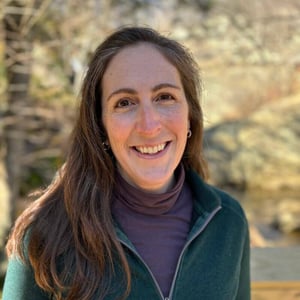
Christine Pickens, Science Director

Dr. Christine Pickens is a wetland ecologist with over 15 years of experience in ecological research, restoration project management, and partnership building on projects in North Carolina, Louisiana, Ohio, Georgia, and California. 

Christine has managed a diversity of projects including restoring coastal wetlands on barrier islands in the Gulf of Mexico, enhancing marsh and expanding oyster habitat in the Albemarle and Pamlico Sounds, re-wetting pocosin in northeastern North Carolina, and riverine restoration within the Cape Fear River Basin. 

She is adept at securing and administering federal, state, and private grant funding for large-scale restoration and conservation projects. A common theme in her work is utilizing partnerships to improve project impact. For example, she’s worked with municipalities, military partners, National Wildlife Refuges, private landowners, federal and state environmental agencies, and other conservation organizations.

As Executive Director for Unique Places to Save, Christine ensures that organizational decision-making is grounded in evidence-based knowledge. Her current on-the-ground efforts are focused on multidisciplinary coordination of dam removal and conservation of imperiled wetland types. She’s also expanding public access to and understanding of nature through park development and educational outreach.

Christine earned her Ph.D. in Environmental and Evolutionary Biology from the University of Louisiana at Lafayette where she researched mangrove and salt marsh interactions in response to climate change.

She also holds an M.S. in Biology from Bowling Green State University where she studied cavity-nesting bird behavioral ecology in oak savanna, and a B.A. in Biology from St. Mary’s College of Maryland.

Christine serves her local community as a volunteer Troop Co-Leader with the Girl Scouts. She is passionate about spending time in nature with her husband and three children.
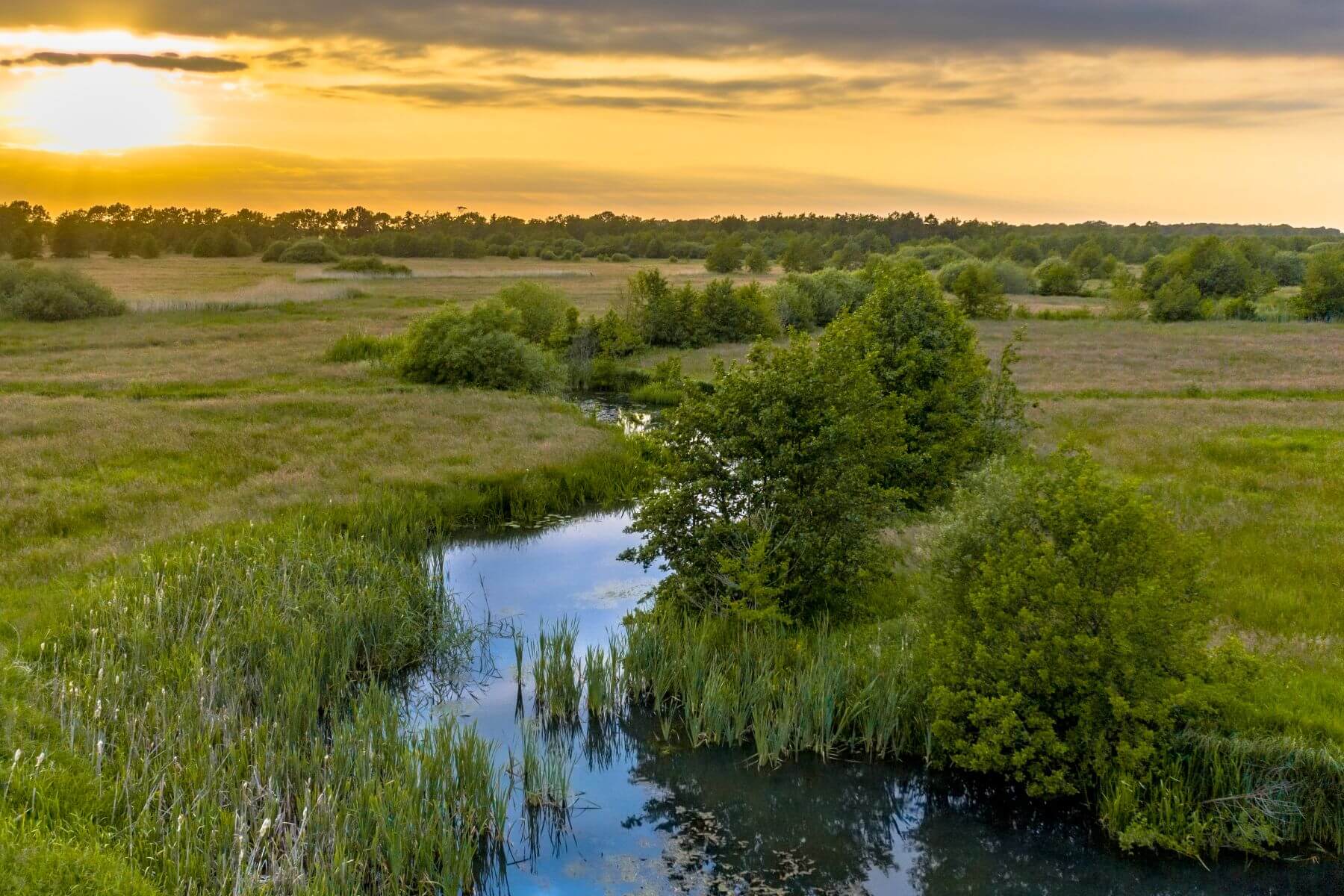
A slow stream winds through an open wetland meadow lined with cattails and shrubs, with a band of trees on the horizon under a golden evening sky.

Michael Scisco, September 2026

What Happens After a Mitigation Bank is Complete?

Regulatory closeout is a major milestone for a mitigation bank. It confirms that the required restoration or enhancement work has been completed, performance standards have been met, and the formal monitoring and maintenance period can end....

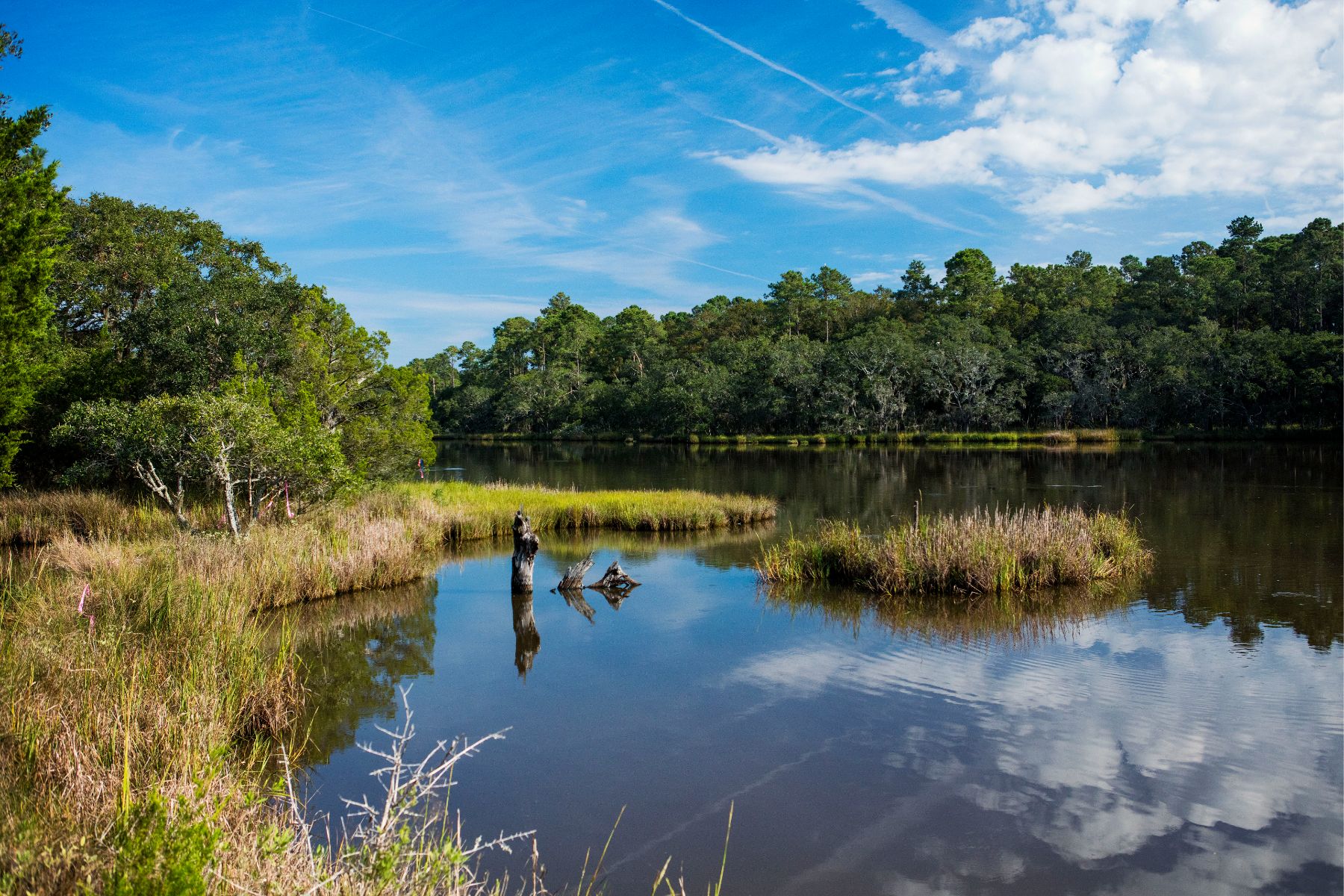
Pink survey flagging tied to shrubs along a marsh-lined creek on the Point Farm conservation easement, with a weathered stump standing in the still water.

Mandi Taylor, September 2026

The Impossibility of Capturing Nature in a PDF

Every profession has the gap between what the job looks like on paper and what actually happens on the ground. In land conservation, that divide can be neatly summarized by one specific, legal document: the Baseline Documentation Report (BD...

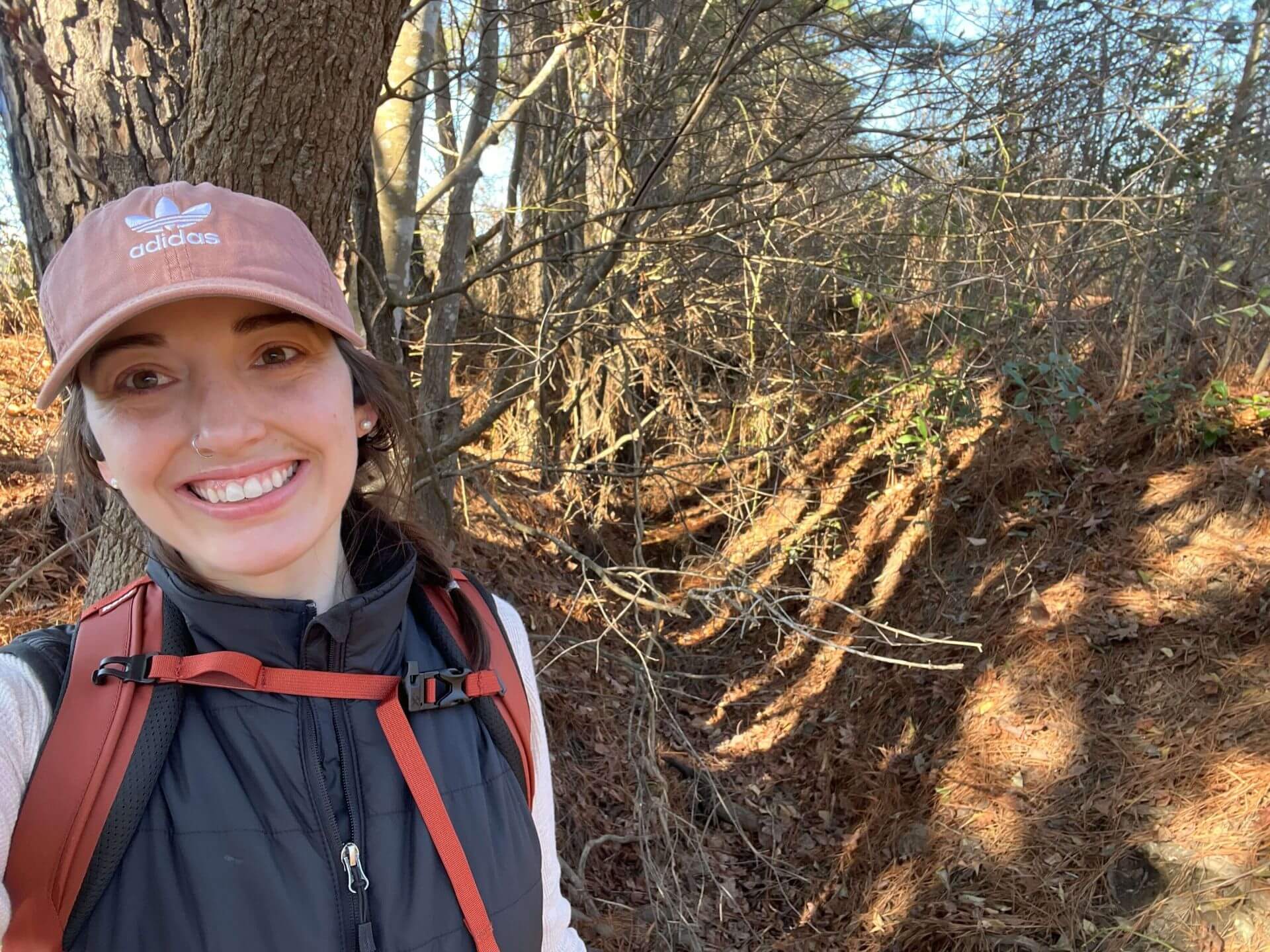
Mandi Taylor smiling beside a tree in bare winter woods, wearing a cap and a daypack, with pine needles covering the slope behind her.

Mandi Taylor, September 2026

Behind the Scenes of Land Stewardship

When people think of land conservation wins, they usually picture all the work and coordination required to place land with rich ecological, historical, or cultural value into a conservation easement. And they are right to celebrate those e...

A shallow rocky river running through summer woodland.

Sam Warnock, August 2026

The River That Built a Town: Ramseur’s Past Shapes Future Conservation (Part Two)

This is the second installment in a two-part series on the Deep River restoration project in Ramseur, North Carolina. For this series, I sat down with Mayor Hampton Spivey and Town Clerk Carol Akers to hear how growing up alongside the Deep...