
Regulatory closeout is a major milestone for a mitigation bank. It confirms that the required restoration or enhancement work has been completed, performance standards have been met, and the formal monitoring and maintenance period can end. But a restored stream, wetland, or associated habitat does not stop changing when the final report is accepted. Closeout marks the beginning of permanent care.
That permanent care is referred to as "long-term management", often shortened to LTM. Its purpose is to preserve the functions and conservation outcomes the mitigation project was created to provide. For mitigation sponsors, landowners, regulators, and conservation partners, a clear LTM plan is what connects a successful project at closeout to a functioning site decades later.
Closeout Changes the Work
Before closeout, the bank sponsor remains responsible for construction, planting, monitoring, repairs, adaptive management, agency coordination, and proof that the site has met its performance standards. That phase is typically 5-7 years long and can require intensive data collection and corrective work.
After closeout, the work shifts from proving that the project succeeded to maintaining the conditions that support its long-term success. Regulations require permanent site protection and identify long-term management and financing as part of the mitigation project. The regulations also recognize that some sites need active care, including prescribed burning, invasive species control, maintenance of water control structures, or conservation easement enforcement.
The exact responsibilities vary by site. A long-term manager should therefore work from the approved mitigation banking document, long-term management plan, conservation easement, agency approvals, and closeout documents.
What Long-term Management Can Include
- Regular site inspections: Conditions on the ground can reveal damaged or missing signs, unauthorized access, erosion, storm impacts, vegetation changes, or other concerns that require attention.
- Active ecological management: Some restored communities depend on recurring work such as prescribed fire, selective thinning, invasive plant control, or maintenance of hydrologic structures.
- Access and management infrastructure: Roads, gates, firebreaks, crossings, and other features may need periodic maintenance so the site can be inspected and managed safely.
- Documentation and reporting: Inspection findings, completed work, emerging concerns, and planned responses must be recorded and reported.
- Coordination: Long-term management may involve the landowner, conservation easement holder, contractors, regulators, neighboring landowners, and other parties whose responsibilities remain separate but connected.
These roles must be defined carefully. The long-term manager is not automatically the conservation easement holder. One organization may manage vegetation and submit annual reports while another monitors and enforces the easement.
French Quarter Creek Shows What Long-Term Management Looks Like
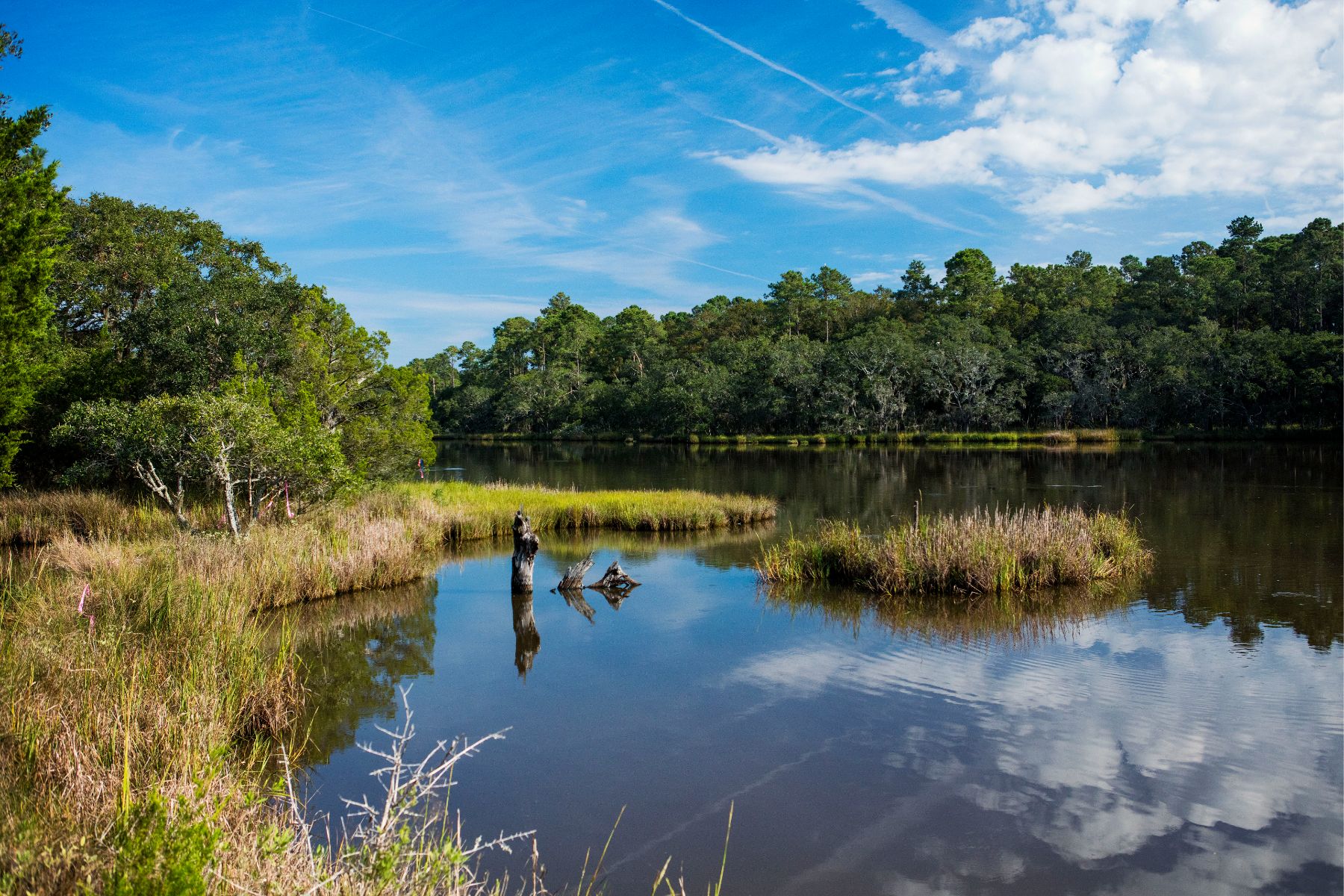
The French Quarter Creek Mitigation Bank in Berkeley County, South Carolina, provides a useful example. The project is designed to restore, enhance, and preserve approximately 374 acres of wetlands within a larger area protected by a conservation easement. The mitigation work includes restoring bottomland hardwood wetlands, reestablishing longleaf pine savanna, enhancing gum ponds, and removing approximately 1.62 miles of excavated ditch to improve wetland hydrology.
Unique Places to Save has agreed to become the long-term manager after the bank sponsor completes the required monitoring and closeout work. Once the transfer occurs, UP2S's planned responsibilities include annual site inspections, prescribed burning, monitoring for invasive and exotic vegetation, access road maintenance, and annual reporting to regulators.
Prescribed fire is especially important at French Quarter Creek. Longleaf pine savannas are fire adapted systems, and periodic burning helps limit woody competition and maintain the open structure and diverse understory the restoration is intended to support. The current LTM Plan calls for burning on a two-to-three-year rotation, subject to an approved fire management plan, site conditions, and regulatory coordination. Firebreaks and access routes must remain functional so this work can be completed safely and effectively.
Long-term Funding Must Match the Site
LTM is a perpetual obligation, so the funding mechanism matters as much as the LTM Plan. Federal rules allow financial investment tools such as non wasting endowments, trusts, and contractual arrangements. Whatever structure is used, the endowment amount should reflect the site's actual management needs, the frequency of recurring work, realistic contractor costs, inflation, and contingencies.
Why UP2S Is Taking on This Work
UP2S's role as a long-term manager is closely related to our work as a conservation easement steward. Both involve caring for protected land in perpetuity, but in different ways. As an easement holder, we monitor the property and uphold the legal restrictions that protect its conservation values. As a long-term manager, we carry out or coordinate the active management required to sustain the site's ecological functions, which may include prescribed burning, invasive species control, access maintenance, inspections, and reporting. These roles may be performed by different organizations, as they are at French Quarter Creek, but both require the same long-term institutional commitment: ensuring that the conservation investment remains protected and functional well beyond the original transaction or restoration project.
Long-term management is what carries a successful restoration project forward as a lasting conservation outcome. It requires dependable staff, sound stewardship systems, careful financial management, and the capacity to respond as site conditions change. Although project-specific funds support the required management of individual mitigation sites, broader support for UP2S strengthens the organization and expertise responsible for fulfilling these obligations in perpetuity. Supporting UP2S helps ensure that restored streams, wetlands, and habitats remain protected, actively managed, and capable of providing their intended ecological benefits for generations to come.
About the Author
Michael brings over 20 years of experience to his role as Trusted Conservation Advisor at Unique Places to Save. He has worked to conserve over 250,000 acres of land across the U.S. while securing over $200M in funding and transacting well over $500M in land and other real estate.
Learn MoreWe are a trusted partner for mitigation bankers for conservation easement & endowment management
Learn More