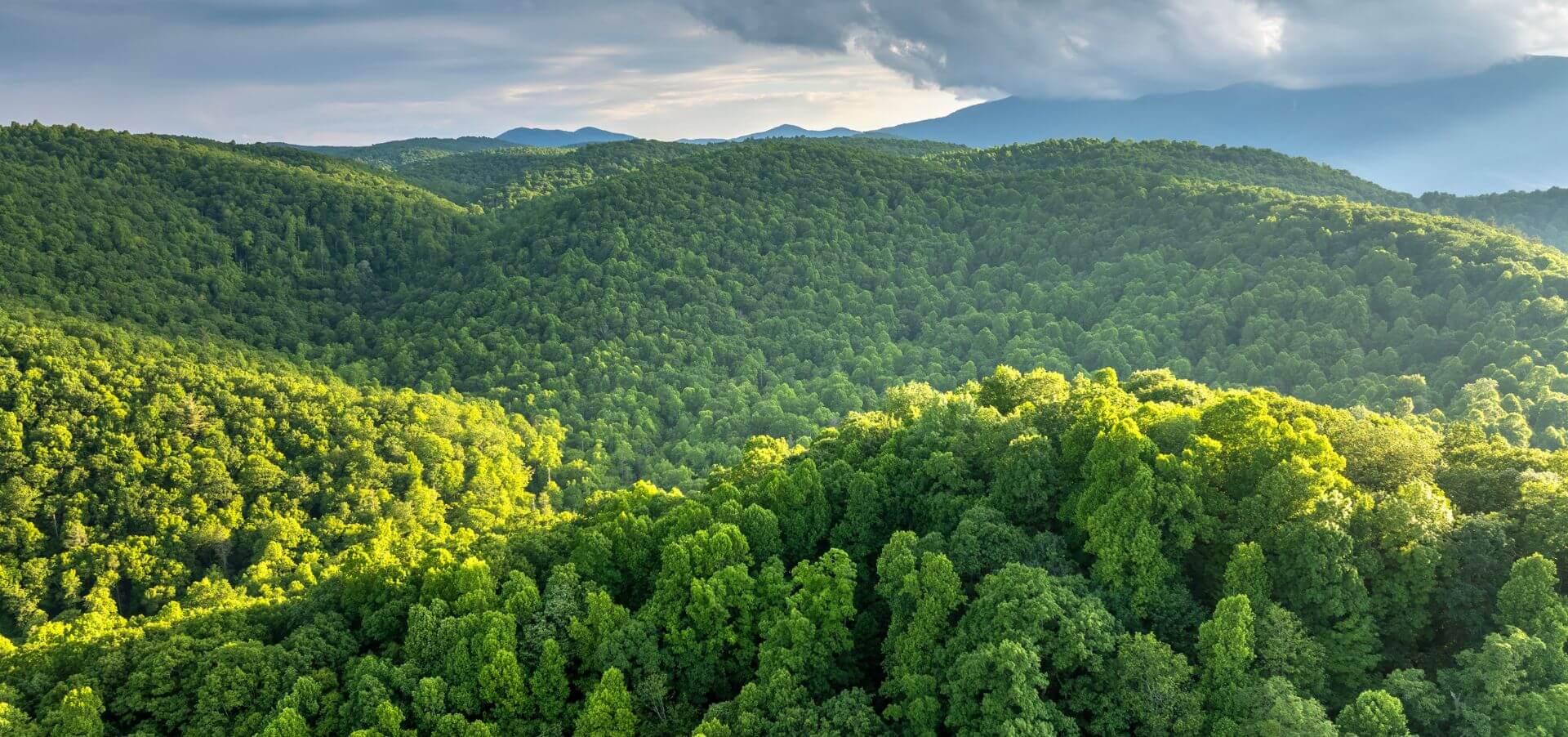

If you’ve ever looked out over a stretch of unbroken North Carolina forest or a multi-generation family farm and wondered, "How can we make sure this land stays protected, forever?" the answer might come down to one legal tool: a conservation easement.
But not all conservation easements are created equal. Behind the scenes, the mechanisms that fund and form these agreements can vary significantly. Historically, Unique Places to Save has done a lot of work with mitigation easements. However, our portfolio has also included non-mitigation easements.
If you are a landowner, a conservation advocate, or just someone curious about how land trusts operate, understanding the difference between these two land protection mechanisms is important to understanding the future of conservation in our state.
How do mitigation conservation easements offset the environmental impact of development?
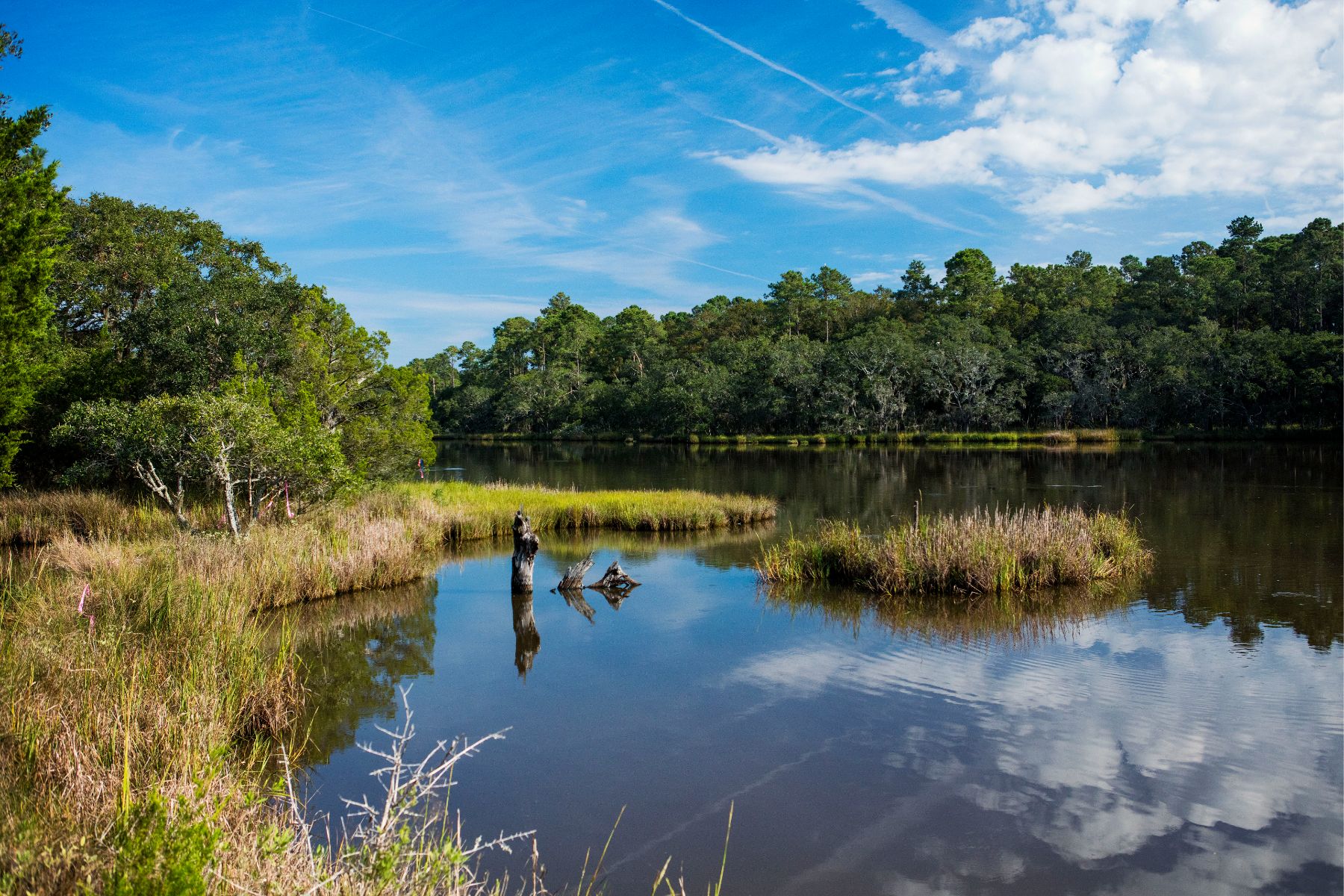
At its core, a mitigation conservation easement is about balance. When a developer or government agency embarks on a project that has unavoidable impacts on natural resources, such as filling in a wetland to build a highway, federal and state laws often require them to offset that ecological loss.
They do this by permanently protecting, and often restoring, a similar ecosystem within the same watershed. These preservation and restoration projects often provide much more ecological uplift than what was originally impacted. The land trust steps in to hold the mitigation conservation easement, ensuring that the restored streams and wetlands remain untouched in perpetuity. These projects are highly structured and regulated by federal and/or state agencies. They are scientifically rigorous, and usually come with a built-in fund provided by the mitigation partner to effectuate ongoing monitoring and stewardship.
Mitigation conservation easements offer a balance between protecting high-quality habitat and allowing society to continue to develop the necessary infrastructure each community needs.
What are the other types of conservation easements?
Non-mitigation easements, on the other hand, are usually born from a landowner’s voluntary desire to see their property preserved. There is no outside development necessarily driving the protection, just a landowner wanting to preserve the conservation values of the land, the memories it holds, and ensuring the land isn’t developed.
This type of conservation easement falls into two main categories:
- Donated Conservation Easements: This is a common act of conservation legacy. A landowner voluntarily extinguishes the development rights on their property and donates that value to a land trust. While they retain ownership of the land and can still live on it, farm it, or recreate on it (depending on the terms of the conservation easement), the land has restrictions on subdivision and development. In return for this gift to the public good, the landowner often qualifies for federal and/or state income tax deductions for their donation.
- Acquired (Grant-Funded) Conservation Easements: In other cases, conservation organizations actively seek competitive grant funding to purchase the conservation easement from a willing landowner. This is a vital tool for families who love their land but may not be able to afford to donate its value. This could be because the property represents the vast majority of their financial net worth, retirement savings, or family estate. Purchasing a conservation easement allows the landowners to pull equity out of their land without having the pressure of developing it.
In order to facilitate this, we rely on a network of grant funding. North Carolina is incredibly fortunate to have several dedicated funding sources designed to protect our natural heritage and agricultural economy.
Which grant funds are the engine of conservation in North Carolina?
When we work to acquire a non-mitigation conservation easement, we are usually working to access funding from a few primary state and federal resources:
- The North Carolina Land and Water Fund (NCLWF): Formerly known as the Clean Water Management Trust Fund, this is a great provider of ecological grant funding in NC. NCLWF awards grants to non-profit and governmental organizations to protect land for natural, historical and cultural benefit, limit encroachment on military installations, restore degraded streams, and develop and improve stormwater treatment technology.
- The NC Agricultural Development and Farmland Preservation Trust Fund (ADFP): North Carolina is an agricultural state, and as urban sprawl pushes outward, we are losing working farms at an alarming rate. Administered by the NC Department of Agriculture, the ADFP provides grants to purchase agricultural conservation easements. This fund is specifically designed to keep family farms farming, support forestry, and ensure that our state’s agricultural economy has the land base it needs to survive into the next generation and beyond.
- The Forest Legacy Program (FLP): Administered through the NC Forest Service using federal USDA funds, the FLP purchases conservation easements on privately owned forest lands. It is specifically designed to prevent working forests from being converted to non-forest uses (like subdivisions), allowing landowners to continue sustainable timber harvests while keeping the ecosystem intact.
- NC Parks and Recreation Trust Fund (PARTF): While PARTF grants are awarded to local governments rather than directly to land trusts, conservation organizations frequently partner with municipalities on these projects. If a non-mitigation easement or land acquisition includes a plan for public trails or a future nature park, PARTF is often the financial engine making that purchase possible.
- Agricultural Conservation Easement Program (ACEP): Administered federally by the USDA’s Natural Resources Conservation Service (NRCS), ACEP is a massive resource. It is split into two tracks: Agricultural Land Easements (ALE) to keep working farms farming, and Wetland Reserve Easements (WRE) to restore and protect critical wetlands.
- Forest Conservation Easement Program (FCEP): A highly anticipated addition to the federal Farm Bill, FCEP is designed as a forest-focused complement to ACEP. If funded through Congress, it will empower land trusts to purchase development rights from willing private landowners to keep working forests intact, closing a major historical funding gap for private timberlands.
- Federal and Local Matches: State grants rarely cover the entire cost of an easement. We frequently pair NC funds with federal programs, like ACEP, or local county or municipal funding to finish a project.
Whether a conservation easement is born from a mitigation requirement, a family’s generous donation, or a complex, grant-funded acquisition, the end result is the same: the land remains protected in perpetuity.
As Unique Places to Save continues to balance both mitigation and non-mitigation projects, we are becoming better equipped than ever to protect the unique places that make North Carolina home.
About the Author
With dual Master’s degrees in Public Health and Business Administration, Mandi has successfully secured federal grants and managed significant projects that enhance environmental and community well-being. She leverages her diverse background to contribute to sustainable conservation efforts that protect vital ecosystems.
Learn More